Is Your Institution Getting the Most from Its Classrooms?
Key Takeaways:
- Track classroom utilization as a KPI to guide data-driven decisions, prioritize improvements, address deferred maintenance, and ensure transparency in resource planning.
- Overutilization reduces flexibility, limiting scheduling options, informal learning, collaboration, and future program growth.
- Underutilization signals inefficiency, leading to unnecessary costs and missed revenue opportunities for rentals or continuing education programs.
- Effective classroom utilization is strategic, not just about maximizing numbers; it’s about aligning space use with institutional goals and culture.
How effectively is your institution using its classrooms? A utilization analysis offers a powerful lens for institutions to assess how well their instructional spaces are being used. One of the key metrics is the proportion of hours a classroom is scheduled during the typical weekly scheduling window, compared to the total hours available.
While it might seem intuitive to aim to fully book a classroom space, most institutions target a range around 70% utilization for general-purpose classrooms equaling two-thirds of available weekly room hours (the total number of hours in a week that classrooms are available for course scheduling).
This guideline isn’t arbitrary; it reflects a commonly accepted strategic balance between efficiency and flexibility. It ensures that these classrooms, equally available for scheduling across disciplines, are actively used while leaving room to adapt to shifting academic needs, such as last-minute course additions, special events, or fluctuations in enrollment.
The Limits of High Space Utilization
When classrooms are consistently scheduled, institutions can cap the need for additional space, controlling maintenance, energy, and staffing costs. But there’s a trade-off: pushing utilization too high limits scheduling flexibility and reduces opportunities for informal learning, collaboration, or spontaneous academic engagement. This lack of flexibility can also limit potential for future programmatic growth. Only environments with fixed schedules and predictable, consistent enrollments such as select vocational or technical programs at a community college—may benefit from full utilization.
The Risks of Low Space Utilization
Meanwhile, low utilization may point to unnecessary operational expenses and missed revenue opportunities, especially for institutions that rent out space or run continuing education programs. Underutilization can also prompt deeper questions about how well existing facilities align with current academic priorities and student needs.
What is Your Classroom Utilization Sweet Spot?
Tracking utilization as a key performance indicator enables institutions to make smarter, data-driven decisions. It helps to inform prioritization of improvements and address deferred maintenance and supports transparency and accountability in resource planning.
While 70% classroom utilization is a common benchmark, there are reasons to aim for a lower target. Institutions that emphasize the potential for informal learning and collaboration, more common to many liberal arts colleges, may prioritize open access to classroom spaces over strict efficiency. Classrooms in these settings often serve as multipurpose environments for study, collaboration, or relaxation, contributing to a vibrant and supportive campus culture. For these institutions, a lower, more accommodating utilization target of 50% of available weekly room hours for general-purpose classrooms--or less—may be attractive.
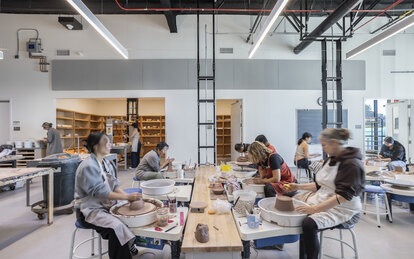
A 50% utilization target is often applied when assessing utilization of departmentally held classroom spaces, recognizing that these spaces may serve double-duty for the disciplines they’re connected with, hosting meetings, brown bag lunches, guest speakers, and other activities when they’re not formally scheduled for courses. The same 50% guideline is commonly applied to specialized labs dedicated to specific courses or disciplines, such as art studios and science labs, where set-up and breakdown, and informal use (such as student project work) is a key component of their use. These specialized environments are also not readily usable for other courses.
Conclusion
Classroom utilization isn’t about maximizing numbers, although that’s of course important—it’s about using space strategically in the way that makes the most sense to the institution. Whether the goal is operational efficiency, academic flexibility, or student-centered design, understanding how space is used is a main ingredient in creating environments that foster learning, innovation, and community.