More than Human: Designing for Wildlife
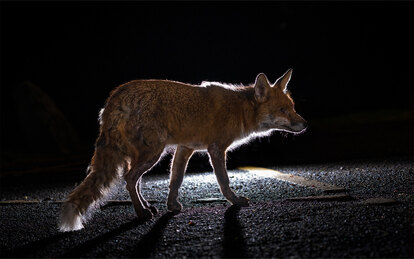
Human survival is inseparable from the survival of other species. The natural systems that sustain wildlife also regulate our climate, grow our food, clean our water and buffer us from disease. When those systems unravel, our own lives become more fragile too.
More than 83% of people now live in urban areas, and that number is still climbing. As development spreads, wildlife is losing habitat, movement corridors and the ability to safely coexist with humans. The result is a global crisis: the World Wildlife Fund reports a 69% decline in terrestrial wildlife populations since 1970.
To respond to this crisis, we set out to understand how design can support both people and wildlife. What would it take to make this real on every project? Our research was made possible through SmithGroup’s Exploration Grant Program.
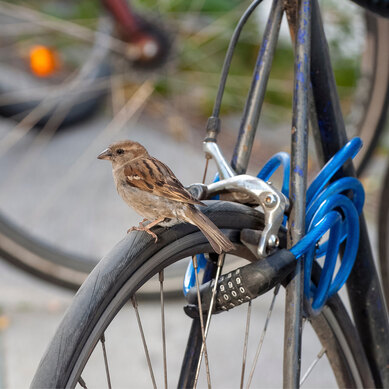
The form of our cities already shapes the daily survival of countless species, from humans crossing streets, to birds and pollinators vulnerable to windows, to large mammals navigating fragmented landscapes. Yet those of us in the architecture, engineering and construction (AEC) industry rarely consult the people who study how wildlife survives in cities.
To understand why this collaboration gap persists, and what it would take to close it, we interviewed ecologists and designers grappling with these questions every day. We discovered four key insights and actions that designers can take to shape our cities for both humans and non-humans alike.
Wildlife is missing from urban design, architecture, landscape architecture, and engineering workflows.
Seth Magle, urban ecologist and Director of the Urban Wildlife Institute at Lincoln Park Zoo, emphasized that wildlife ecologists are often brought into urban design projects too late (if at all), after key decisions have already been made. Their role is reduced to damage assessment rather than outcome shaping. Early and continuous collaboration is essential if ecological priorities are to influence site planning, building placement, and connectivity in meaningful ways.
Design decisions directly affect whether wildlife survives in cities.
Stanley Gehrt, Principal Investigator of the Cook County Coyote Project, makes clear that wildlife adapts to cities, but at a cost. Fragmented green spaces force animals into risky routes, dramatically increasing mortality from vehicle collisions. Thoughtful design of corridors, crossings and refuges can reduce conflict and support coexistence. Reactive responses, such as lethal removal, often worsen the problem.
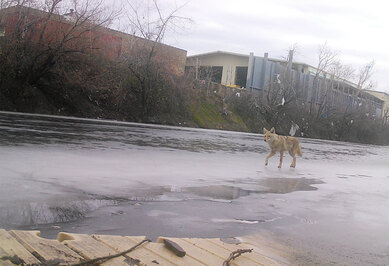
Camera trap photo of a coyote living in the Chicago area. Courtesy of Urban Rivers.
Public perception can enable or derail good design.
Landscape architect Robert Rock underscored that how people perceive wildlife often determines whether projects succeed at all. Fear, misinformation and cultural narratives can overshadow science and pragmatic design. But compelling storytelling, community education and humility in engagement can turn anxiety into support. The story of P‑22, the Los Angeles mountain lion whose popularity galvanized public backing for The Wallis Annenberg Wildlife Crossing, shows how community support can lead to implementation and tangible change.
Design translates science into place.
Thomas Hauck, co‑founder of Studio Animal Aided Design in Berlin and Professor at TU Wein in Vienna, describes designers as interpreters. Biologists understand species’ life cycles and spatial needs, but those requirements must be translated into form, materials and systems. Species‑centered design, such as planning for nesting, foraging, shelter and movement in buildings and open spaces, turns abstract ecological data into spatial strategies such as green roofs for pollinators, bat roosts in facades, and bird‑friendly glazing.
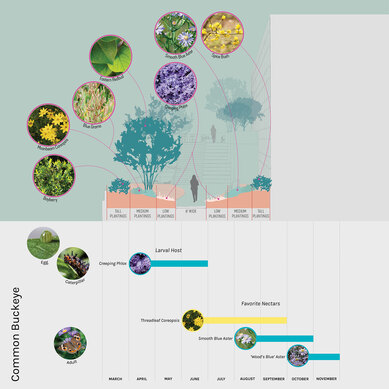
This SmithGroup design for a confidential headquarters project incorporates butterfly and pollinator habitat into a tiered landscape showcasing native plant species.
Where to Go from Here
- Build ecology into design scopes and fees. Wildlife‑inclusive design requires time, expertise and continuity. AEC practitioners should consult wildlife experts and other ecologists at the start of each project. Ecological collaboration should be budgeted from pre‑design through post‑occupancy, not treated as an add‑on.
- Develop a shared lexicon. Designers, planners and ecologists often use the same words to mean different things, or different words to describe the same concept. Glossaries that define shared vocabulary will reduce friction and enable collaboration between ecologists and designers.
- Standardize post‑occupancy wildlife monitoring. Just as buildings are evaluated for energy performance, landscapes and structures should be evaluated for ecological performance. Using biodiversity metrics and monitoring, we can learn which design interventions allow which species to survive, and what to change in future projects.
- Normalize biodiversity as a design performance metric. Biodiversity should be treated with the same seriousness as decarbonization, resilience or accessibility. It must be tracked, measured and discussed as a core outcome of design if we are going to mitigate the decline of terrestrial wildlife and the viability of urban life.
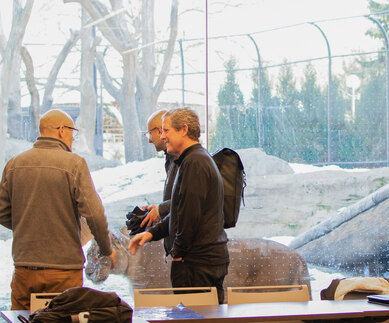
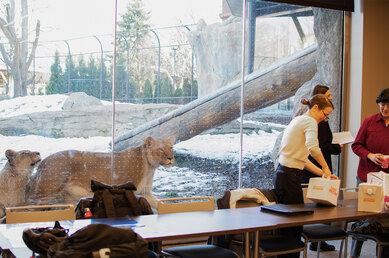
Lions look on during a meeting of ecologists and designers at the Lincoln Park Zoo.
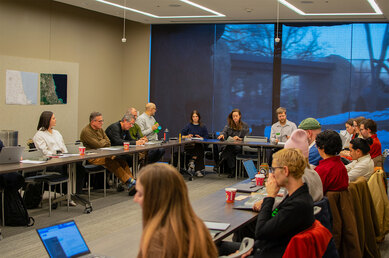
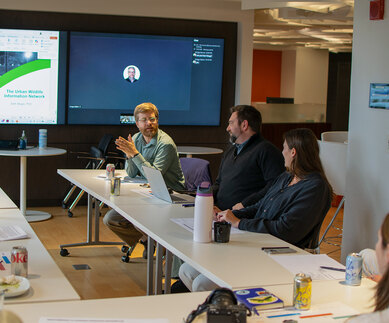
The authors’ engagement of Chicago-area experts during their research led to the formation of Wild Chicago, an advocacy group/think tank dedicated to fostering greater collaboration between ecologists and AEC-industry designers.
Call to Action
Designers can no longer treat wildlife-friendly cities as a niche or secondary aspiration. More-than-human design is a practical, necessary response to biodiversity loss, climate change and the growing recognition that human wellbeing is inseparable from ecological health. By folding natural science into design workflows, architects, planners, engineers and landscape architects can move beyond purely human‑centered approaches and begin to shape environments that function as shared habitat.
The benefits extend well beyond wildlife. Biodiverse cities provide ecosystem services like stormwater management and temperature regulation. They also build climate resilience and support biophilia, the innate human need to connect with living systems. When biodiversity is treated as a design driver rather than a constraint, our cities will become healthier, more adaptable and more inspiring places to live.
To help advance this work in the greater Chicago area we formed an advocacy group/think tank with the experts who contributed to our research. We invite designers, planners, ecologists, and clients to join the conversation, share insights, test ideas and apply these principles on real projects. Biodiversity is not limited to planting design. Architecture, infrastructure and public space can all function as habitat when designed with intention. If cities are where the future of humanity will be decided, they must also be places where other forms of life are welcome to thrive.
Read the authors’ full Exploration Grant research report here.