Human-Centered Design is a Competitive Advantage in the AI Era
Amid the noise surrounding artificial intelligence, what’s truly at stake often gets lost: People.
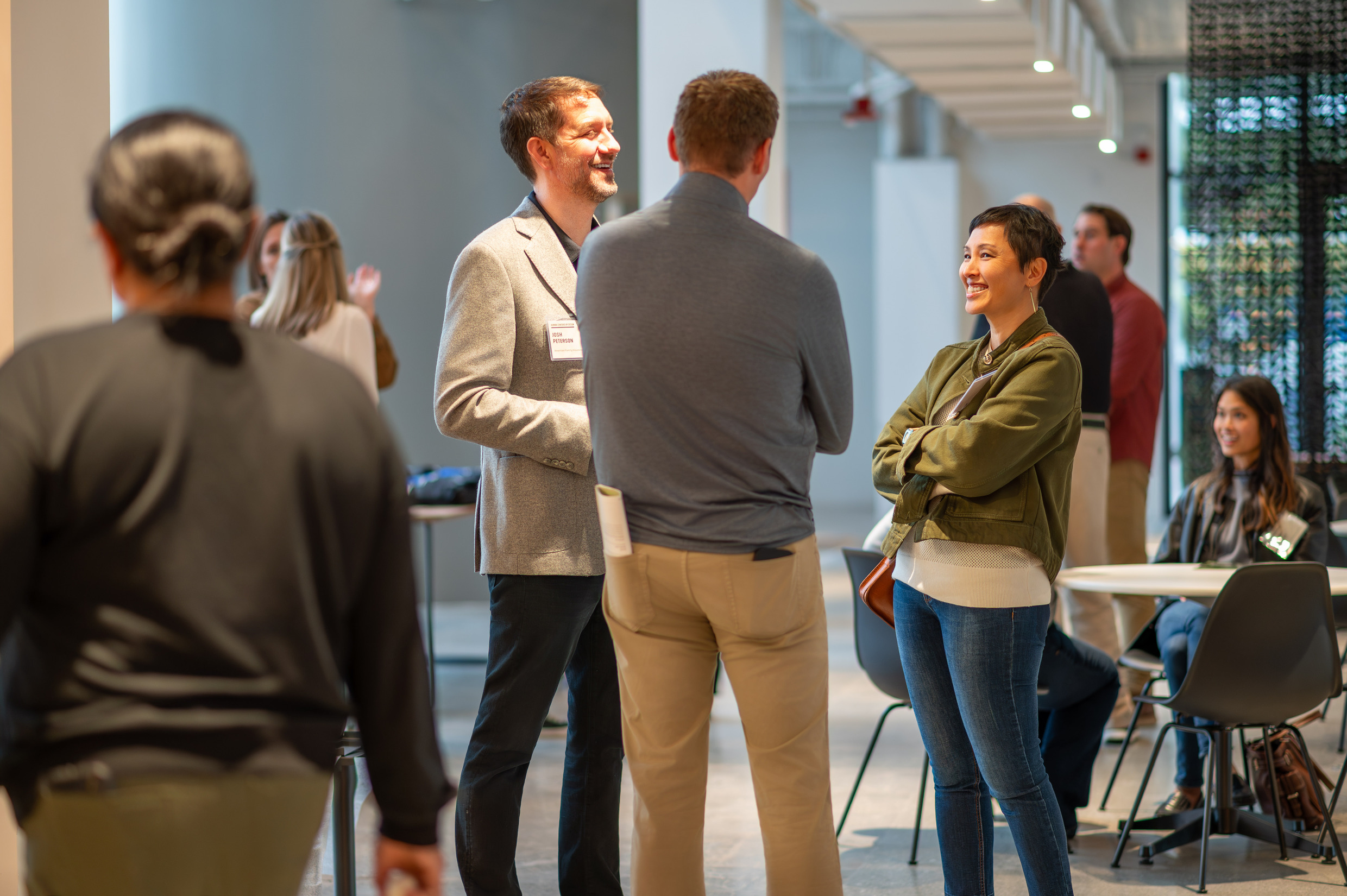
As AI accelerates efficiency, organizations face a deeper—and more consequential—question: How do we sustain originality, trust and human performance in a world where machines increasingly do the thinking? With fewer people entering the workforce and ideas becoming a premium, human potential is no longer an abstract value: It is an economic imperative. The future of work will not be defined by how advanced our tools and technologies become, but by whether our environments still enable people to imagine, question, explore and create. AI can process information, but it cannot spark or instill true meaning.
Research shows that our innate creative capacity declines dramatically over time. As algorithms take on more cognitive load, the risk is not that humans become obsolete—but that human curiosity, imagination and ownership quietly erode. In this context, place takes on a new role. No longer passive or purely functional, it becomes a critical lever in shaping how people think, connect and contribute.
This is why designing for humanity is not a philosophical stance—it is strategic. In an AI‑driven world, the environments that matter most will be those that amplify what machines cannot: Creativity, trust, belonging and meaning. These qualities cannot be mandated or automated. But they can be invited. Thoughtfully designed places create conditions where ideas emerge, relationships form and people feel a sense of agency over their work and their communities.
Importantly, this shift requires resisting over‑definition. The most resilient environments are not those that prescribe every experience, but those that leave room for participation, adaptation and change. When spaces balance technology with moments of human respite—when they invite curiosity, ritual and shared experience—they remain relevant because people are empowered to shape them over time. In this way, place becomes strategic infrastructure. Not because it dictates behavior, but because it supports possibility. Not because it predicts the future, but because it allows people to become co‑authors.
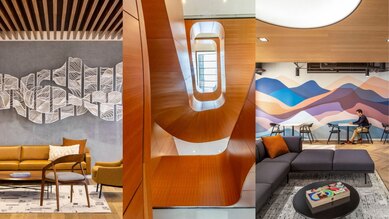
As AI continues to evolve, organizations that succeed will be those that understand a simple truth: Efficiency can be automated, but humans and human potential cannot. The spaces we design must do more than serve as places for tasks: They must nurture and sustain the human capabilities that make progress possible in the first place.
Designing for what machines cannot is no longer optional. It is how we protect—and unlock—human potential in the AI era.
To read the full report, click here.