The Strength Shift: What the Rise of Heavy Lifting Means for Campus Rec Design
Key Takeaways:
- Strength training now anchors student fitness culture, fueled by evidence‑based health knowledge and a desire for structure, community, and personal empowerment.
- Recreation facilities must be built for adaptability; large column‑free spaces provide the versatility needed to evolve equipment layouts and program offerings over time.
- Open sightlines and simple, intuitive circulation help students feel comfortable, learn from peers, and participate with more confidence.
- With fitness trends continually shifting, reconfigurable spaces, like Texas A&M’s expansive open strength floor, ensure long‑term relevance and operational resilience.
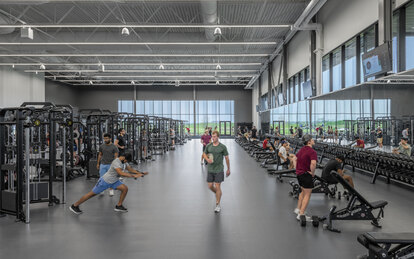
Walk into almost any campus recreation center today and you’ll notice a clear shift. While treadmills still hum and group fitness studios remain busy, the heart of student activity has moved—decisively—toward heavy strength training. Squat racks are full. Platforms are occupied with dozens more waiting their turn. Strength culture has evolved into a defining feature of collegiate recreation. We see this shift not just in participation data but in how students move through space, how long they stay, and how they define personal wellness. Heavy strength training isn’t a trend—it’s a foundational change in how students engage with fitness, community, and identity on campus. As designers of recreation and wellness environments, we’re being challenged to rethink not just what spaces support student fitness and wellbeing, but how those spaces can evolve as student needs continue to change.
Why Strength Training Has Taken Center Stage
The rise of strength training among college students is driven by more than aesthetics or social media—though those play a role. Today’s students arrive on campus with unprecedented exposure to evidence‑based fitness information. They understand the benefits of resistance training for mental health, bone density, injury prevention, and long‑term metabolic health. Strength training has become synonymous with empowerment and control at a time when students are navigating academic pressure, social change, and uncertainty. What’s changing most is intentionality. Many students aren’t wandering into recreation centers for casual workouts; they’re following structured programs, tracking progress, and training heavy multiple days per week. They form informal lifting communities, coach each other, and share space across skill levels.
Designing for Strength at Scale
This shift has had immediate implications for how we think about the allocation and prioritization of space in campus recreation. Traditional layouts are struggling to keep up with strength demand. In many facilities, weight training zones now experience the highest density and longest dwell times of any program area. Heavy strength training requires more space per user, higher ceiling heights, structural load capacity, acoustic control, and intentional circulation. It also requires psychological comfort. Students need to feel confident loading a barbell, failing a lift safely, and learning without intimidation.
The Power of a Clear Span
One of the most effective ways to future‑proof strength environments is deceptively simple: large, column‑free floor plates.
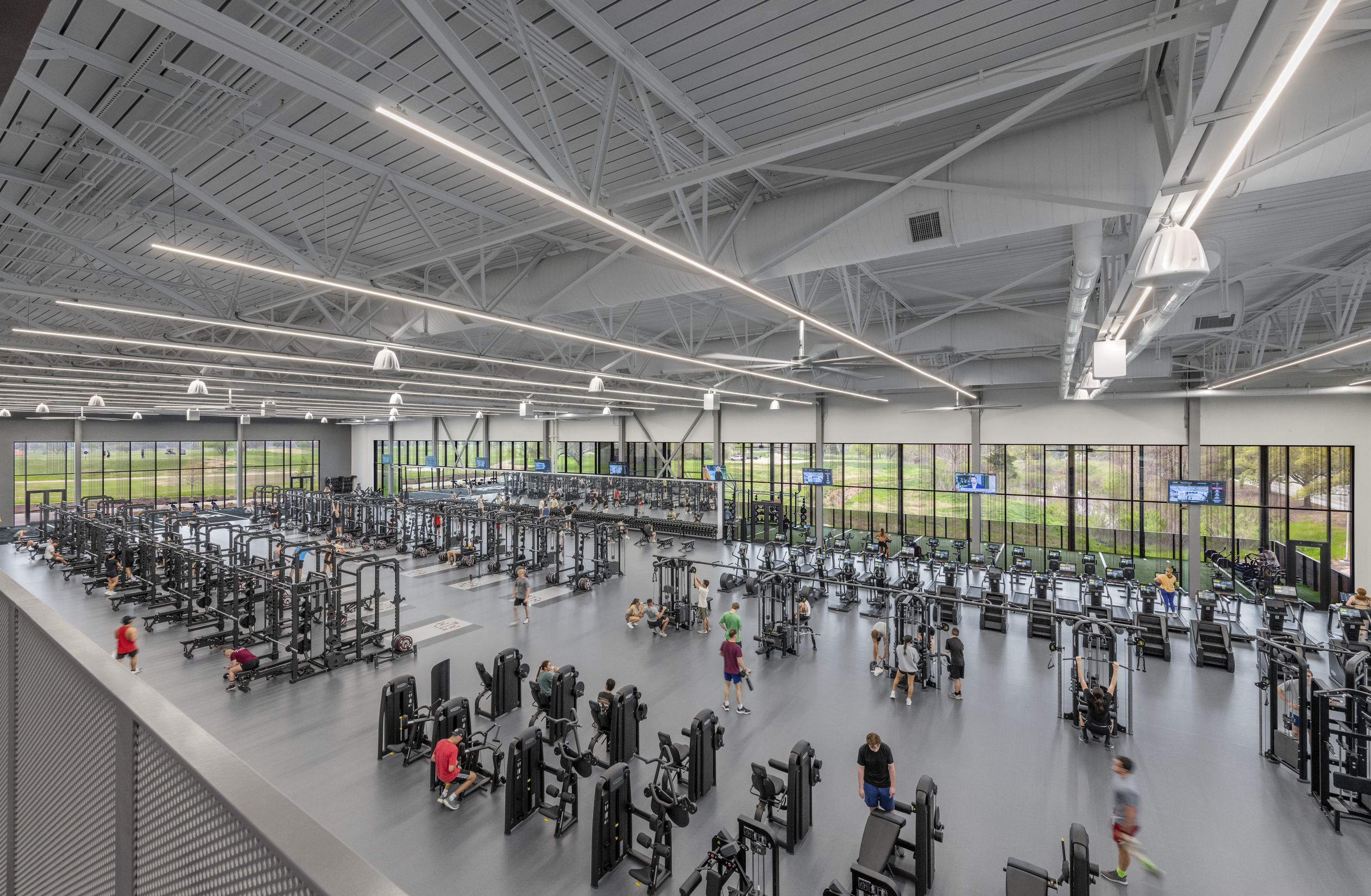
Open structural spans allow recreation staff to reconfigure equipment layouts as training methods evolve. They support heavier loads without forcing layouts around structural constraints. They allow strength spaces to expand, contract, or hybridize with other programs—functional training, performance testing, recovery, or even entirely new wellness models that that are yet to be conceived.
Designing for Belonging
Large, open spaces also support one of the most important outcomes of modern recreation design: inclusive strength culture. Strength training can be intimidating, especially for students without prior experience. Visibility, openness, and clear organization matter. When sightlines are unobstructed and circulation is intuitive, students can observe, learn, and build confidence. They see peers at all experience levels sharing space—and that visibility normalizes participation.
A Case in Point: Texas A&M
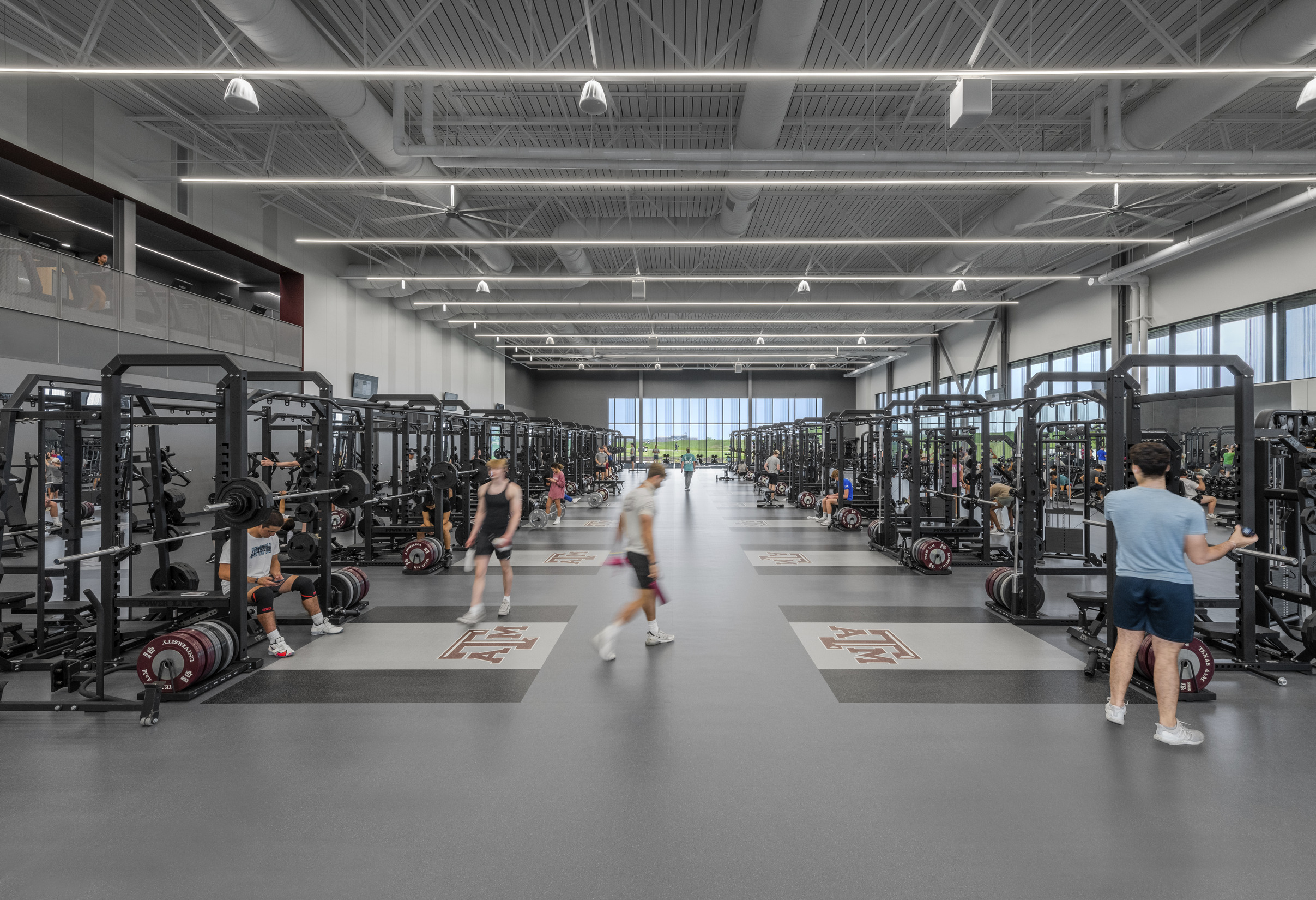
At Texas A&M University’s Southside Recreation Center, this principle was central to the design approach. The facility includes expansive 100’ x 250’ column-free strength and conditioning space, enabling unprecedented layout flexibility. That openness supports current demands for lifting platforms, power racks, and sled training—but more importantly, it allows the university to pivot as student interests change over time.
Flexibility as an Operational Asset
From an operations perspective, flexibility is invaluable. Recreation staff are responding to new equipment types, new safety protocols, and new participation patterns every year. Fixed rooms with tightly prescribed uses simply can’t keep up. Large open spaces allow campuses to adjust staffing models, test new programming, and respond to spikes in demand without major renovations. Platforms can be swapped for turf. Racks can be rearranged for group training or removed for events. The space works harder across more hours of the day. At Texas A&M, the open fitness environment also support large user volumes without feeling overcrowded. Students self‑distribute, and the space absorbs peak demand more gracefully than compartmentalized layouts.
Planning for the Unknown
The most important thing to acknowledge is this: we don’t know what college fitness will look like in 2040. But we do know it will be different. Strength training may continue to dominate, or it may blend with performance science, wearable integration, or recovery‑based wellness models. Social fitness may deepen. Data‑driven training may redefine layouts. Whatever direction it takes, facilities designed around flexibility will adapt—and those designed around fixed assumptions will struggle.
Strength, after all, is about adaptability. Our buildings should be no different.